
United Gutters Case Study
- Home
- United Gutters Case Study
How We Generated $95K in Work for a Gutter Contractor
Initial Problem and Project
United Gutters Wanted a Simple Online Presence
When Oleg from United Gutters first reached out to me, his request was simple and reasonable. He ran a gutter business in upstate New York and wanted a basic website. His goal was to have something online where homeowners could see what services he offered, read reviews, and view examples of his work. Nothing complicated, nothing aggressive — just a clean digital presence.
That request alone isn’t unusual. Most contractors I work with initially think of a website as a digital brochure. They want something that “exists,” not necessarily something that performs. But after reviewing his situation more closely, it became clear that simply recreating another static site would not solve the real problem.
The Previous Website Was Not Performing
Before working with me, the client already had a website built by an overseas consulting firm. On paper, it looked like a finished product — pages were live, services were listed, and there was some basic structure in place. In reality, it wasn’t doing anything for the business.
The site wasn’t generating leads. It wasn’t building trust. It wasn’t answering homeowner questions. It existed, but it didn’t contribute. As a matter of fact, homeowners were mentioning to Oleg that his website was crap.
This is something I see often. A website can technically be “complete” while still being ineffective. Without intention behind structure, messaging, and trust signals, traffic doesn’t matter — and neither does design.
I Saw an Opportunity to Design for Conversion
Instead of treating this as a redesign project, I treated it as a conversion problem.
I wasn’t interested in making the site look newer or cleaner just for aesthetics. I wanted to understand how homeowners think when they land on a contractor’s website — what they’re worried about, what they’re trying to confirm, and what makes them take the next step.
From the beginning, I framed the project around one goal: turn local homeowners who already have a gutter problem into real inquiries.
Designing for Homeowner Conversion
I Structured the Site Around 3 Core Homeowner Questions
In my experience, every successful service website answers the same three questions immediately:
Who are you?
What do you do?
How do I know that you will do a good job for me?
If a visitor can’t get clear answers to those within seconds, they leave — even if they need the service.
So instead of starting with design trends or copy tricks, I structured the entire site around those questions. Every section, image, and block of content had a purpose. Nothing was added just to “fill space.”
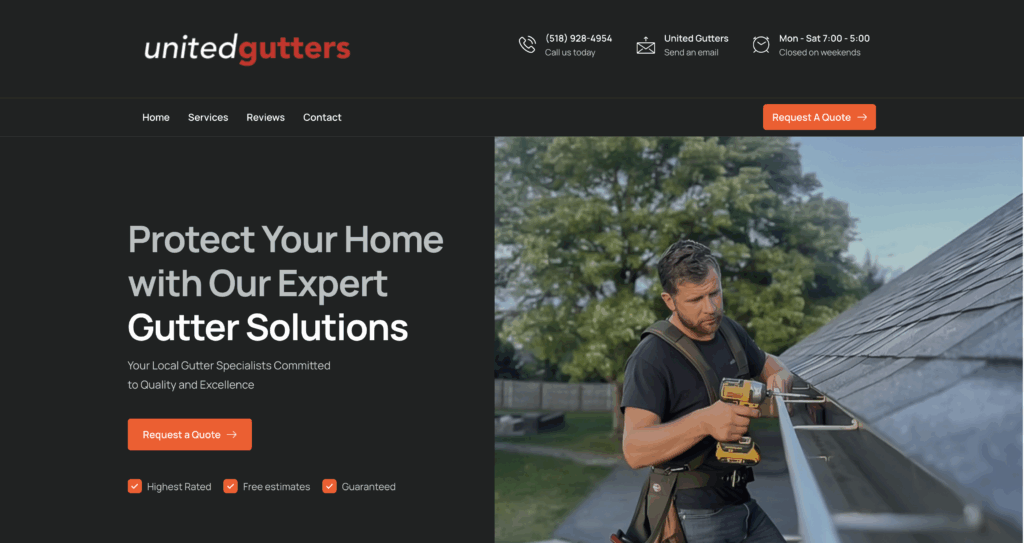
I Showcased Oleg to Build Personal Trust
One of the biggest mistakes contractor websites make is hiding the actual person behind the business. Stock photos, generic icons, and faceless branding create distance — and distance kills trust.
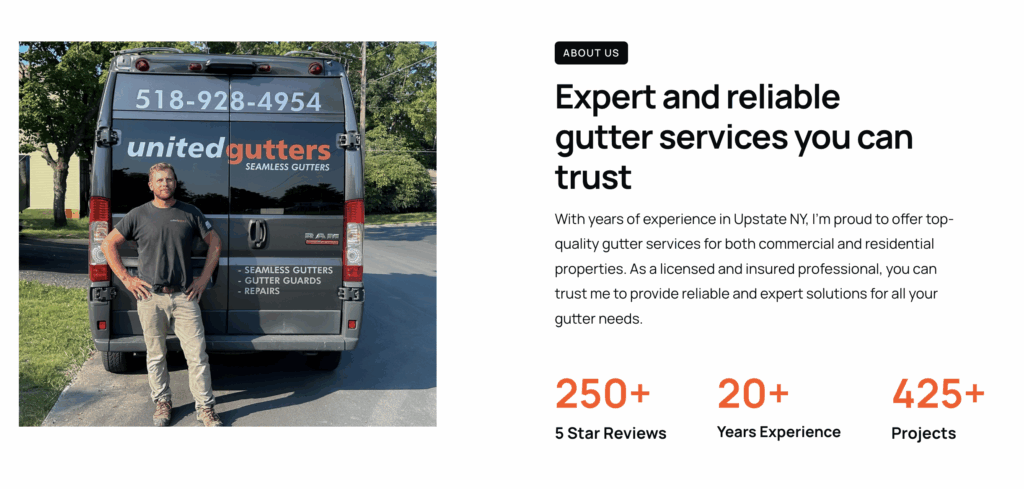
I made the decision to put Oleg front and center. Real photos. Real work van. Real presence.
When homeowners land on the site, they immediately see who they’re dealing with. They can picture the person who will show up at their home. That single decision removes a massive amount of uncertainty, especially in a trade where trust matters more than polish.
This wasn’t about personal branding for the sake of it — it was about transparency.
Building Credibility and Visual Trust
I Highlighted Strong Google Reviews
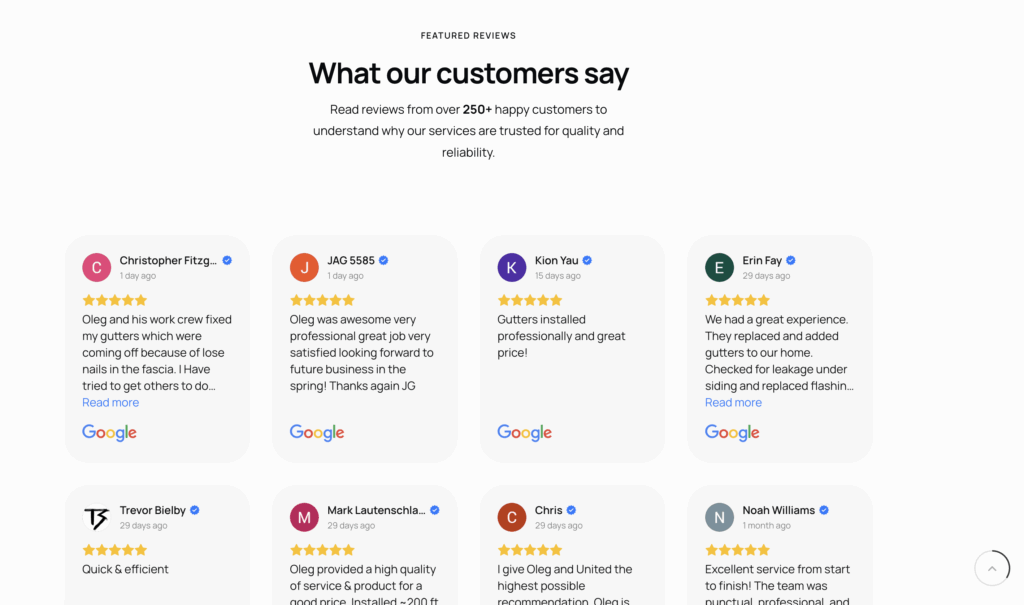
The business already had over 250 Google reviews, most of them five-star. That’s an enormous trust asset — but it wasn’t being used properly.
I made those reviews visible and prominent. Visitors didn’t have to hunt for proof or leave the site to confirm credibility. The reputation was right there, reinforcing everything else the site was saying.
This matters because homeowners don’t trust claims — they trust patterns. Reviews create patterns of reliability.
Trust Turned Into Leads Quickly
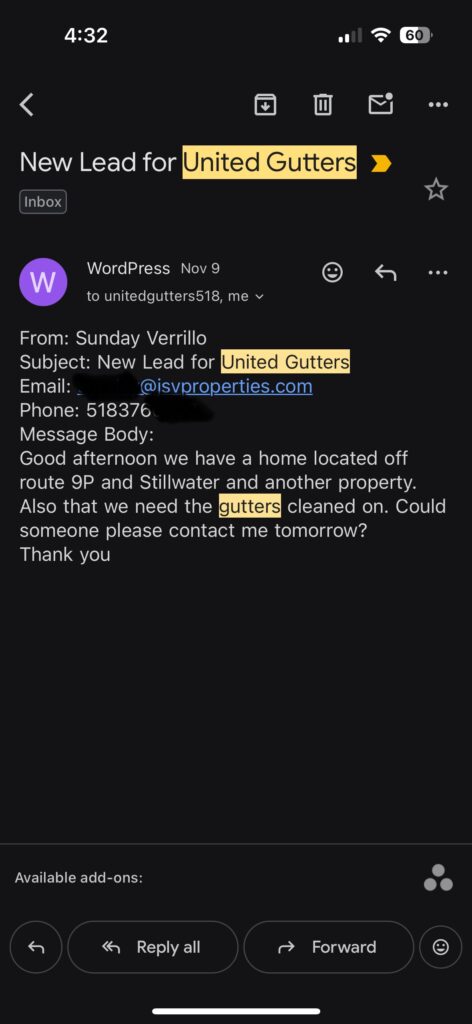
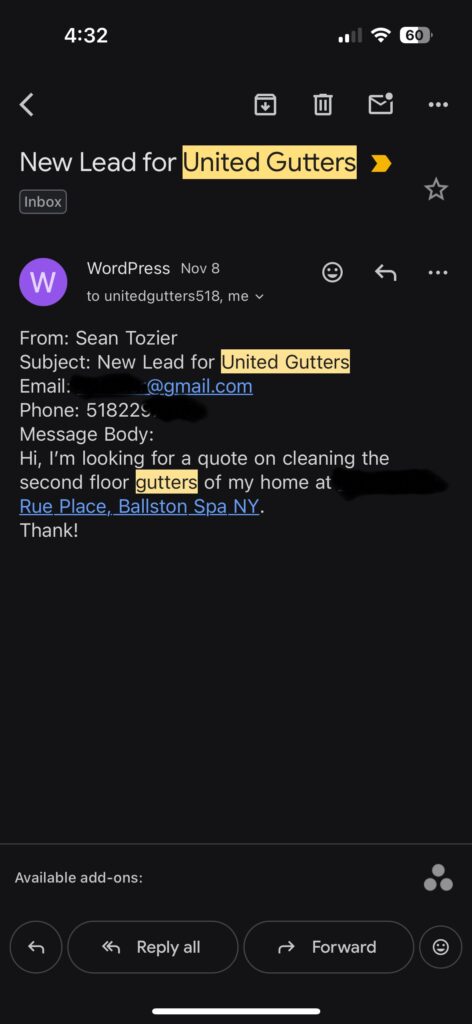
Once the site went live, the response was almost immediate. Within days, inbound inquiries started coming in.
That was the clearest validation of the approach. No ads. No aggressive promotion. Just structure, clarity, and trust doing their job.
Leads United Gutters Received


Next Step: SEO and Content Strategy for Growth
I Focused on Local, Problem-Aware Searches
After confirming the site converted visitors into leads, I shifted focus to SEO. But not generic SEO.
Most homeowners don’t research gutters until something goes wrong. Overflow. Leaks. Storm damage. That means content has to meet them after the problem exists, not before.
I built the strategy around local, problem-aware searches — the phrases people use when they’re already looking for help.
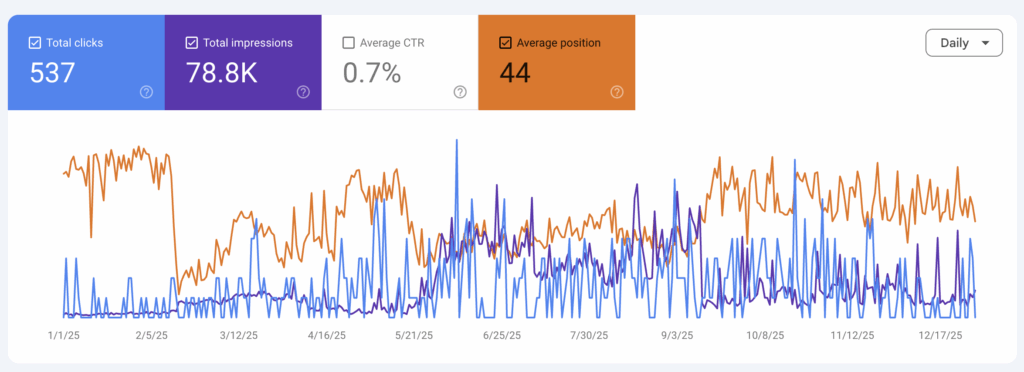
I Used SEO to Drive High-Quality Traffic That Converted(106 Leads in 2025)
Instead of publishing generic listicles or broad educational content, I focused on search intent. We built content around real homeowner decisions—comparisons, repair scenarios, and “what should I do next?” moments. That approach consistently attracted visitors who were already close to hiring.
The goal was never traffic volume. It was relevance.
That focus paid off. This year alone, Oleg generated 106 qualified leads from 537 website clicks directly from organic search—homeowners who found the site because the content answered the exact questions they were asking at the moment they needed service.
The common mistake most people make is aiming for more clicks instead of quality clicks.
The Next Phase: Post-Problem Content for 2026
Looking ahead to 2026, the strategy is simple: double down on what works.
That means expanding post-problem content, refining local visibility, and continuing to align messaging with how homeowners actually behave — not how marketers wish they behaved.
Final Takeaway
This project worked because it wasn’t treated like a design job or an SEO experiment. It was treated like a system.
A system built around:
Real people
Real problems
Clear explanations
And earned trust
That approach consistently outperforms flashy design, generic content, and disconnected marketing tactics — especially for local service businesses.