
What Are the Affordable Website Builders with Drag-and-Drop Features?
Summary
- Drag-and-drop speeds layout work but still benefits from structured planning
- Albany budgets push builders over custom, with known scalability tradeoffs
- Compare pricing, templates, SEO controls, and ecommerce depth side by side
- Use the checklist and decision points to clarify fit before building
In the Capital Region, we see small teams trying to get online without losing weeks to code or four figures to design. Drag-and-drop builders promise a faster start. The question is which platforms deliver enough control for Albany NY growth while keeping costs predictable.
We work with service firms, retail, trades, and nonprofit groups across the local business market. Patterns emerge. A builder that helps a home services firm capture quote requests may not be the best fit for a boutique retailer with inventory sync needs. As a seo company in albany, we care less about the brand name on the editor and more about the conversion mechanics, content structure, and long-term upkeep each platform demands.
What drag-and-drop actually means for small business owners
Drag-and-drop editors let you visually place sections, images, and forms without code. They’re effective for speed and reduce vendor dependency for small changes. But they don’t eliminate the need for planning. A few realities we encounter:
- Layout speed isn’t strategy. You still need page hierarchy, messaging, and analytics goals.
- Reusable blocks save time. Templates with global headers/footers and section blocks prevent drift.
- Content first, design second. Draft copy and offers before styling, or you’ll redesign twice.
- SEO basics still matter. Title tags, schema, internal links, and image compression aren’t automatic.
Why Albany small businesses are increasingly considering website builders
In the Capital Region, budgets are tight and workforces are lean. Builders keep spend predictable and time-to-launch short. We see a few drivers:
- Seasonal revenue means cash constraints. Monthly builder fees smooth out costs versus large custom site invoices.
- Hiring challenges. A reliable internal editor limits reliance on rare development skills.
- Local competition dynamics. Many competitors ship basic sites. A clean builder site can match or exceed the local baseline.
- Speed to pivot. Builders allow quick content shifts when services or pricing change.
Misconceptions around website builders
Cost vs custom builds
Misconception: Builders are always cheaper. Reality: At micro scale, yes. At scale, integrations, add-ons, and staff time can eclipse a focused custom build. We’ve seen owner-operators spend months “saving” $3,000, only to stall growth while they tweak layouts.
SEO performance limits
Misconception: Builder sites can’t rank. Reality: For local terms, they can. The ceiling comes from technical flexibility. When you need custom schemas, multisite structures, or headless deployments, a builder may cap out. For most Albany service businesses, local SEO wins are achievable if content and internal links are disciplined. Platform choice affects convenience, not the fundamentals.
Mobile responsiveness myths
Misconception: All templates are perfectly responsive. Reality: Many are adequate, but camera-heavy hero sections, oversized fonts, and stacked animations can hurt speed and readability on mid-tier Android devices common in field teams. Test on actual phones, not just the desktop preview.
Tradeoffs of affordability vs scalability
Affordability buys you speed and simplicity. The cost is control. As your Albany operation grows—more services, locations, or content formats—you may hit guardrails: limited dynamic content, rigid URL rules, or payment gateway constraints. Plan for how to export content if you outgrow the platform. Some exports are partial, requiring rebuild effort.
Key features to prioritize as a local business
Conversion tools
- Built-in forms with spam control and conditional fields
- Click-to-call and SMS-friendly CTAs for mobile visitors
- Appointment booking or quote request modules
- Promo bars and exit-intent modals used sparingly
Integrations
- Google Analytics 4 and Search Console setup without hacks
- CRM or email marketing sync (HubSpot, Mailchimp, or lightweight alternatives)
- Inventory and POS links for retail, especially if Square or Stripe is in the mix
Mobile optimization
- Per-device control over spacing and image crops
- Lazy-loading and automatic image compression
- Simple font scaling settings
Template flexibility
- Global styles and reusable sections
- Blog and landing page templates that allow unique hero sections
- Basic custom code windows if you need a script or widget
Maintenance requirements
Look for platforms that handle security patches and SSL by default. Automations for backups and domain renewals cut surprises. For a deeper primer on reducing upkeep risk, see this short maintenance explainer.
Top affordable drag-and-drop platforms for Albany small businesses
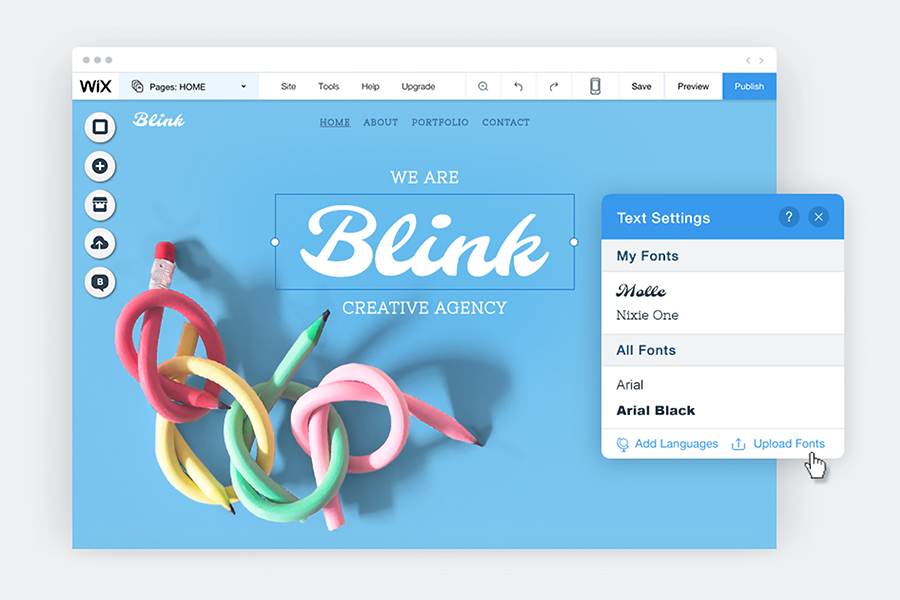
Wix
Pros: Very fast to launch; flexible sections; native apps for bookings and events; strong template library. Cons: Can be easy to over-design; app costs add up; template switching midstream is messy. Pricing: Generally low-to-mid monthly tiers with upsells for ecommerce and apps. Best for: Service firms that need booking/quote forms and simple galleries.
Squarespace
Pros: Consistent design system; clean typography; adequate ecommerce; good blogging experience. Cons: Less granular layout control; fewer third-party integrations than WordPress; certain advanced SEO controls are tucked away. Pricing: Mid-range monthly tiers. Best for: Brands that value visual consistency and straightforward content needs.
Square Online (formerly Weebly)
Pros: Tight POS integration for retailers already on Square; simple product catalogs; quick starter sites. Cons: Limited design depth; slower template evolution; fewer SEO controls. Pricing: Accessible entry tiers; transaction fees on lower plans. Best for: Local shops prioritizing in-person sales with occasional online orders.
WordPress + Elementor (or similar visual builder)
Pros: Full ownership; deep plugin ecosystem; scalable SEO options; broad hosting choices. Cons: More moving parts; updates and plugin conflicts require attention; performance tuning is not automatic. Pricing: Hosting plus premium plugin licenses; still affordable but variable. Best for: Teams that want drag-and-drop with future-proofing and are willing to maintain it.
Webflow
Pros: High design control; clean code output; CMS collections for structured content. Cons: Learning curve; costs trend higher as you scale CMS and traffic; stakeholder training needed. Pricing: Higher than entry-level builders; still reasonable for growth stages. Best for: Design-forward firms or content models that need CMS relationships.
GoDaddy Websites + Marketing
Pros: Simple setup; bundled domain and email options; decent templating for micro-sites. Cons: Limited design nuance; fewer third-party integrations; migration friction. Pricing: Low to mid, often with promos. Best for: One-page or small brochure sites under time pressure.
Builder-to-builder comparison
| Platform | Starting price (monthly) | Drag-and-drop depth | Ecommerce | Learning curve | Best for |
|---|---|---|---|---|---|
| Wix | Low | High | Good with apps | Easy | Service firms, events, bookings |
| Squarespace | Mid | Moderate | Solid core | Easy | Visual brands, blogs, simple stores |
| Square Online | Low | Basic | POS-centric | Easy | Local retail on Square POS |
| WordPress + Elementor | Variable | High | Plugin-based | Moderate | Content-heavy sites, SEO growth |
| Webflow | Mid–High | Very high | Integrations | Moderate–Hard | Design-led, CMS-driven content |
| GoDaddy Websites | Low | Basic | Limited | Very easy | Micro-sites, quick launches |
Checklist: What Albany businesses should clarify before choosing a builder
- Primary goal: calls, quote requests, bookings, or sales?
- Traffic source mix: search, social, referrals, or paid?
- Content cadence: static brochure, monthly blogs, or frequent updates?
- Integration needs: CRM, email marketing, POS, payments?
- Ecommerce depth: single product, small catalog, or inventory management?
- Team skills: Who will edit pages and how often?
- Compliance: ADA considerations, tax rules, data retention?
- Migration path: If you outgrow the builder, how will you export content?
- Maintenance: Who checks updates, backups, and analytics monthly? See this quick upkeep checklist.
Decision tree: Where to start
- If you need POS-first retail and already use Square → Start with Square Online. If you outgrow it, reassess for WordPress or Webflow.
- If you want fast, good-looking pages with minimal training → Squarespace. If you later need more SEO control, consider WordPress.
- If you need flexible drag-and-drop and built-in booking → Wix. Reassess if app costs grow or templating limits appear.
- If long-term SEO and content architecture matter → WordPress + Elementor. Budget for periodic maintenance.
- If design precision and CMS relationships drive value → Webflow, but schedule training time.
How drag-and-drop platforms fit (or don’t) with digital growth plans
We look at fit by growth phase:
- Launch: Builders reduce friction. We prioritize clear calls, tracking, and a small page set.
- Stabilize: Add landing pages for key services and neighborhoods in Albany NY and the Capital Region. Builders handle this well.
- Expand: As pages, schemas, and integrations pile up, you may need more control over performance and workflows. WordPress or Webflow becomes more attractive.
The hidden cost is time. Owners who spend weekends adjusting margins are not running campaigns. As a seo company in albany, we tend to streamline page layouts and focus on content and internal links that move rankings and conversions.
When to reconsider DIY site building
- Your site needs complex filtering, multilingual support, or multi-location data structures.
- You rely on third-party scripts that conflict with the builder’s sandbox.
- Organic visibility is stalled despite good content, and technical constraints are the bottleneck.
- Every new campaign requires a workaround that slows teams down.
At that point, a controlled migration plan with phased rebuilds reduces risk. We’ve found that keeping the blog on the old platform while testing a new services section can ease the transition.
Scenario breakdowns: Picking a platform by use case
- Home services in Albany NY: Wix or WordPress + Elementor. Emphasis on booking, reviews, and neighborhood pages.
- Boutique retail in the Capital Region: Squarespace if style and small catalogs; Square Online if POS is central.
- Professional services: Squarespace for aesthetics; WordPress if publishing and resource hubs matter.
- Design-led studio: Webflow for precision and CMS relationships.
FAQs for Albany small businesses
Can a builder site handle seasonal traffic spikes?
Usually. Hosted builders scale better than a bargain WordPress host. If your campaigns drive large spikes, confirm plan limits and caching.
Do I lose control over SEO settings?
You get the basics: titles, descriptions, redirects, and image alt text. More advanced controls vary. WordPress with a quality SEO plugin offers the widest control. Webflow provides robust settings. Others are adequate for typical local needs.
Can I switch templates later?
Some platforms make this painful. Evaluate template flexibility up front and plan global styles to avoid rework.
Are builder sites truly mobile-friendly?
Templates are responsive, but design choices can break readability. Test on common devices and compress images to protect speed.
How do monthly costs add up?
Line items include the plan fee, domain, optional email, and any apps. Over two to three years, some stacks approach the cost of a modest custom build. The value is faster iteration.
What if I need custom functionality later?
Check for custom code blocks and integrations. If the roadmap includes advanced features, consider WordPress or Webflow for headroom.
Conclusion
In the Albany market, drag-and-drop builders lower the barrier to a usable site. The right choice depends on your revenue model, integrations, and how fast your content footprint will grow. We’ve seen builders carry firms far when strategy and maintenance are consistent, and we’ve also seen teams hit ceilings that force migration. Clarity up front limits surprises later.
